GeoAg
Program
New Age Gardening
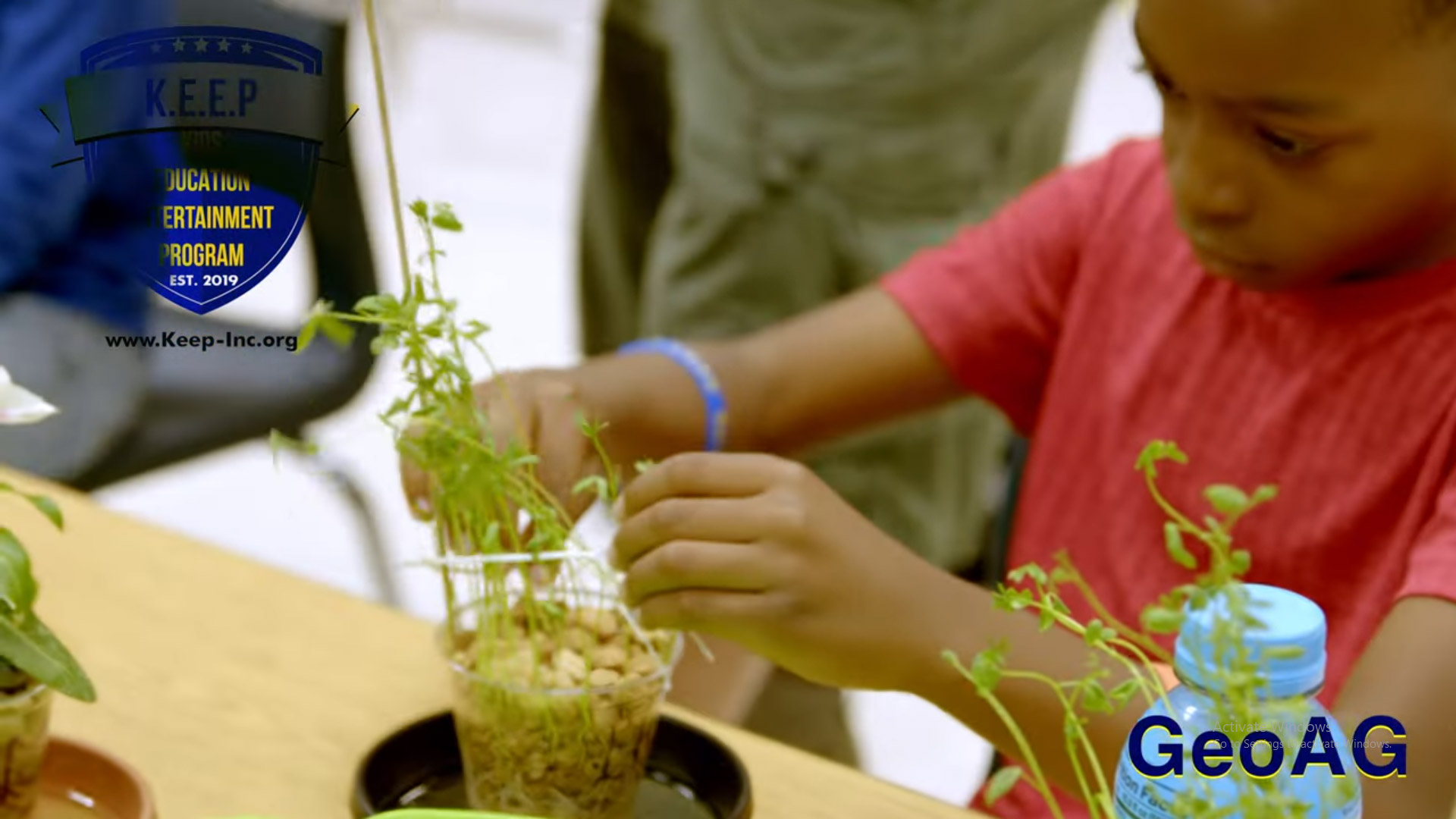
Geological Agriculture or GeoAg is the science and study of growing plants & food in rocks, with absolutely no soil or fertilizers!









Innovative Food Production
Under the expert guidance of Richard Campbell, the visionary Founder of “To Soil Less,” our GeoAg program is revolutionizing the way youth across the country engage with STEAM (Science, Technology, Engineering, Arts, and Mathematics). We are excited to introduce young minds to an innovative approach to gardening that breaks away from conventional practices. In our GeoAg program, participants learn how to grow and sustain a diverse array of vegetables, fruits, and flowering plants using a gravel medium, completely eliminating the reliance on soil and fertilizers. This cutting-edge technique not only embraces modern agricultural science but also promotes sustainability and environmental responsibility.
GeoAg stands as one of the most efficient methods for cultivating crops, representing a significant advancement in food production. While our educational approach includes opportunities to utilize limited soil, it’s important to emphasize that no soil is necessary for achieving healthy, thriving plants. This shift in perspective encourages participants to think critically about resource use and the future of food production in an increasingly urbanized landscape.
help fuel innovation, and efforts to expand educational opportunities∗
K.E.E.P. - Kids - Education - Entertainment - Program
Our Impact
GeoAG
Our GeoAg program focuses on science, helping students cultivate an interest in STEAM by exposing them to a form of new age gardening. GeoAg teaches students how to grow and sustain vegetables, fruit and flowering plants using gravel, with no use of soil or fertilizers.
During each 6-week interval, students engage in Geological Agriculture lessons and experiments where they conduct actual GeoAg research.
In local communities across the nation, including those in metro Atlanta, we are facing an increasing number of food deserts. Food deserts are geographic areas where residents have limited (and sometimes no) access 17 to affordable and healthy foods — especially fresh fruits and vegetables. Food deserts are disproportionately found in high-poverty areas, where residents have lower levels of education, lower incomes, and higher rates of unemployment (Aecf.org, 2021).
In addition, around the world, many agricultural sectors are facing looming challenges, including dwindling fertilizer reserves, environmental impacts of conventional soil inputs, and increasingly difficult growing conditions wrought by climate change. As the planet continues to change thanks to global warming, the cost of eating and the need to source affordable food options increases globally (Researchgate.net, 2020).
Mr. Campbell and those who share his knowledge believe that the issue of hunger can be alleviated through a source that’s readily available – rocks. It is believed that naturally occurring rocks and minerals may help address these challenges. Opportunities through which the GeoAg can assist across four key agricultural challenges include:
- Providing environmentally sustainable food production, by tapping into mineral nutrient reserves of rocks.
- Reducing contamination from farm pesticides
- Embedding drought resilience into agricultural landscapes by increasing soil moisture retention and boosting plant availability despite looming drought.
- Mitigating emissions of major greenhouse gases— (carbon dioxide, methane, and nitrous oxide).
Most notably, potential for GeoAg approaches appear to meet several emerging challenges that threaten sustainable food and fiber production, while contributing to achieving some of the United Nations Sustainable Development Goals such as ‘Zero Hunger,’ ‘Life on Land,’ and ‘Climate Action’ (Researchgate.net, 2020).
GeoAg FAQ's
When configured properly, gravel gardening benefits are:
- No soil needed
- Less Watering
- Limited to no fertilizers
- Less Weeding
- Nutritious
- All Natural; gravel, sand, and cotton
- Less Cost
- Long Term Gardening
- Sustainable
- Efficient Irrigation System
- Durable
- Drought resistant
Source: Tosoilless.com
It’s important to expose students to relevant learning opportunities in early grades, as this will help them retain their interest in and love of learning these topics (Eschoolnews.com, 2019). Exposure to GeoAg shows promise for learning and literal survival.
Education – We have developed a full curriculum in the field of geological agriculture with a full curriculum up to doctorate level.
Academic Programming:
K-12 Experiments
University Study
Summer Camp
S.T.E.A.M
Science. Technology. Engineering. Arts. & Mathematics.
Tag us, show us, follow us!
Our Social Media
Follow us on social media and see us liven up learning using comedy, arts and science to increase literacy, communication, and critical thinking skills that will aid youth in becoming empowered creators of tomorrow.